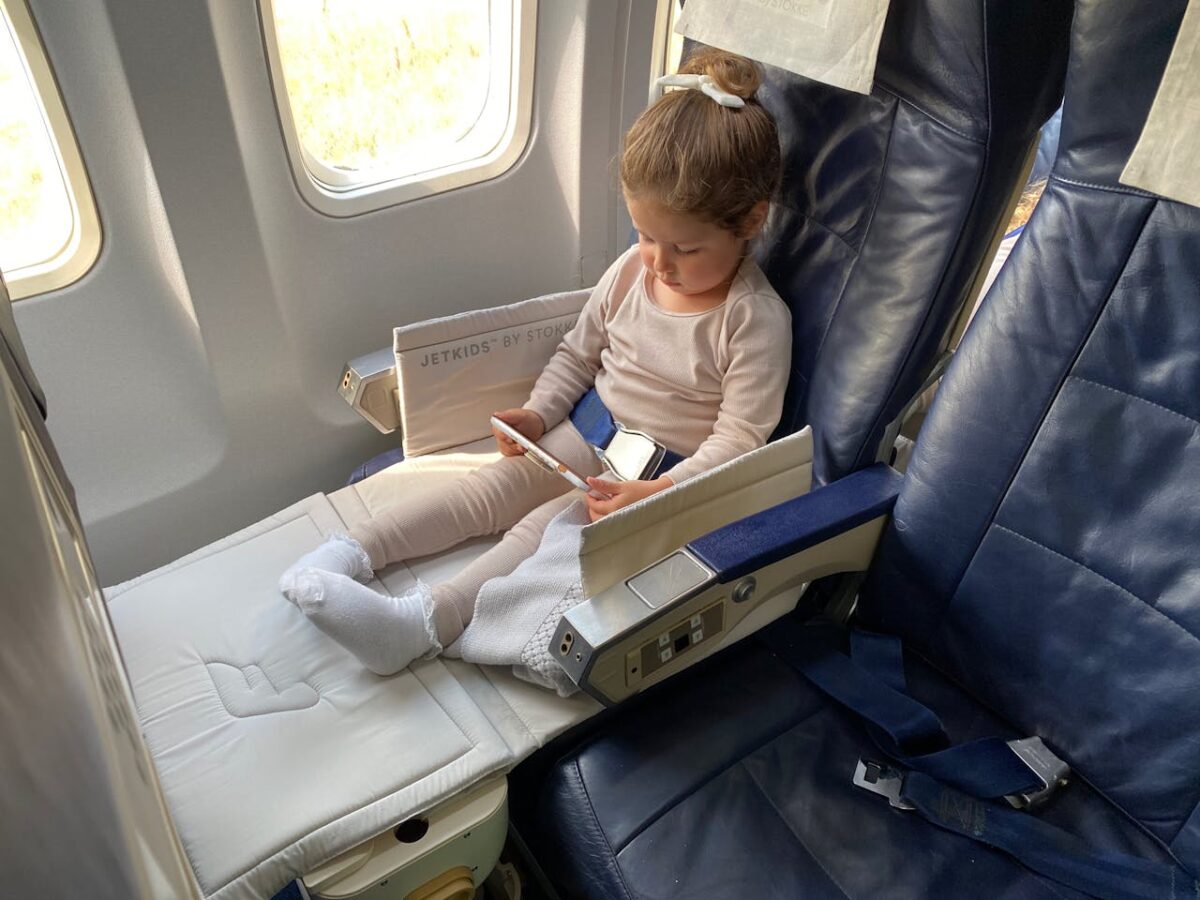

Long flight with kids? These compact, practical strategies keep them busy, calm, and smiling, whether you have a toddler or a tween at the window.
Create a Custom Activity Kit for Each Child
Assemble a small, zippered pouch with new and familiar items: a crayon set, a mini coloring book, sticker sheets, a notepad, and a small fidget toy. Swap one new item mid-flight to reset interest without packing heavy supplies.
Personalize kits by age, adding magnetic travel puzzles for school-aged kids and board books or sensory cloths for toddlers. Keep everything flat and contained, and label the pouch so items don’t get mixed up with other carry-on gear.
Pro Tip: Wrap one surprise item in tissue or paper to create a “reveal moment” after the first hour, which buys you calm time right when attention usually fades.
Use a Downloaded Screen Strategy That Stretches Time
Preload shows, movies, and interactive apps, then divide screen access into timed blocks instead of allowing continuous watching. Announce screen windows, for example 45 minutes on, 30 minutes off, and fill non-screen windows with analog activities.
Include a portable battery and child-friendly headphones to avoid scrambling for plugs. For longer trips, download a few new episodes or an unfamiliar movie to capture curiosity later in the flight.
Quick Tip: Turn off autoplay on apps and queue only the titles you want, so the next item does not auto-start and shorten your planned intervals.
Turn Snacks into Small Rewards and Projects
Pack a variety of portioned snacks in resealable bags and use them as part of a reward system or as a hands-on activity, like building tiny snack mosaics on napkins. Edible incentives can motivate quiet play or seat-based tasks without sugar overload.
Offer a small “snack challenge” during turbulent or boring stretches, for example arranging cereal shapes by color or assembling a mini sandwich puzzle. This keeps hands busy and discourages frequent visits to the galley.
Expert Insight: Include one special snack you only bring on flights, that way it becomes a higher-value reward kids look forward to saving for longer stretches.
Create a Travel Art Station with Reusable Surfaces
Bring a clipboard or lap desk, washable markers, and a mini whiteboard or reusable coloring book to reduce mess and waste. Having a flat, defined workspace improves focus and prevents spills on the tray table.
Include simple cut-and-paste activities using stickers instead of liquid glue and encourage collaborative drawing games, such as passing the sketch to add one object each round. These encourage interaction and stretch creative energy across the family.
Insider Tip: Use a small microfiber cloth and a resealable bag to store marker caps, and clean the board quickly when it is time to sleep or eat.
Play Audio Adventures and Interactive Read-Alongs
Download audiobooks, language lessons, and kid-focused podcasts that spark imagination without screens. Pair an audiobook with a small printed “scene map” or simple picture prompts to make listening interactive and help kids follow along.
Encourage kids to act out sound effects or sketch quick scenes after chapters, turning passive listening into a creative break. Audio is ideal for nap prep because it keeps noise level low while still entertaining young minds.
Heads Up: Test audio files and headphone jacks before you leave, and bring a backup headphone splitter if you want to share a single device with your child.
Run a Scavenger Hunt or Flight Bingo
Create a printable scavenger hunt or bingo card with airplane-friendly items like “pilot announcement,” “cloud that looks like an animal,” or “a red luggage tag.” Kids can cross off boxes, take photos, or collect tiny evidence to trade for rewards.
Adapt the list for age and seat location so kids on the aisle, middle, or window have fair tasks. This activity gets them engaged with the environment and reduces the urge to roam the cabin repeatedly.
Worth Knowing: Laminate or use a clear sleeve for cards so you can reuse them with a dry-erase marker, cutting down on paper and saving time when you fly again.
Bring Quiet Magnetic or Travel Version Games
Compact magnetic travel sets for chess, checkers, or magnetic stories are perfect for plane trays, they stay together and provide extended playtime. Card games like Uno or a deck of picture cards can be adapted for quick rounds that end before rest time.
Introduce a “one-round” rule to keep games moving and prevent fights over long matches, then switch to cooperative games like story-building to keep mood positive. For younger kids, matching or memory games strengthen focus quietly.
Pro Tip: Choose games with minimal pieces and pack them inside a small zip bag to avoid losing components in seat crevices.
Pack Multi-Sensory Fidgets and Quiet Toys
Select tactile toys that are quiet, compact, and can be used in multiple ways, such as textured balls, soft playdough in an airtight container, or linked rings for fine motor play. Rotate toys at intervals to avoid quick burnout.
Teach kids a few finger games or simple tricks with fidget tools so they can play independently. Quiet fidgets are especially handy during takeoff, landing, or when other passengers need low noise levels.
Quick Tip: Keep fidgets in an outer seat pocket or easily accessible pouch so you can reach and swap items without rummaging in overhead bins.
Plan Mini “Jobs” to Involve Older Kids
Give older children responsibility-based tasks like timekeeping for the family, logging flight map updates, or being the “in-flight photographer.” These roles create purpose and keep them invested in the travel experience.
Challenge them to document the trip with a 10-photo story or to spot ten city features from the aerial view, and then discuss their findings. Tasks teach observation skills and offer a constructive outlet for their energy.
Expert Insight: Offer an end-of-flight reward tied to completion of their tasks, such as choosing the next activity or an extra audiobook chapter, to reinforce positive participation.
Design a Nap and Movement Routine That Fits the Flight
Schedule sleep and stretch breaks by using the first hour for active play, the middle stretch for a quiet activity and nap, and the last hour for a calm game. Predictable routines reduce surprises and help kids relax when the aircraft cabin dims.
Encourage simple in-seat stretches and short supervised walks to the restroom area when permitted, to break up long sitting spells. Use a favorite blanket or pillow to signal sleep time so kids wind down faster.
Insider Tip: Choose seats with a bit more legroom if possible, and book flights that match your child’s sleep schedule to make naps more likely on board.
Ready to Try These on Your Next Flight?
Pick two or three tactics that suit your child’s age and temperament, try them on the first flight segment, and adjust as you go. Small, consistent swaps will save energy and keep the cabin calm while your family reaches its destination.
Which strategy will you try first on your next trip, or what trick has worked best for you with kids on a plane?